Disclaimer: This post may contain referral and affiliate links. Simple Budget UK is a participant in the Amazon Services LLC Associates Program. If you sign up or buy something using our links, we may earn a small commission at absolutely no extra cost to you. We only recommend tools and products we genuinely use to manage a low-income budget. Thank you for supporting Simple Budget UK!
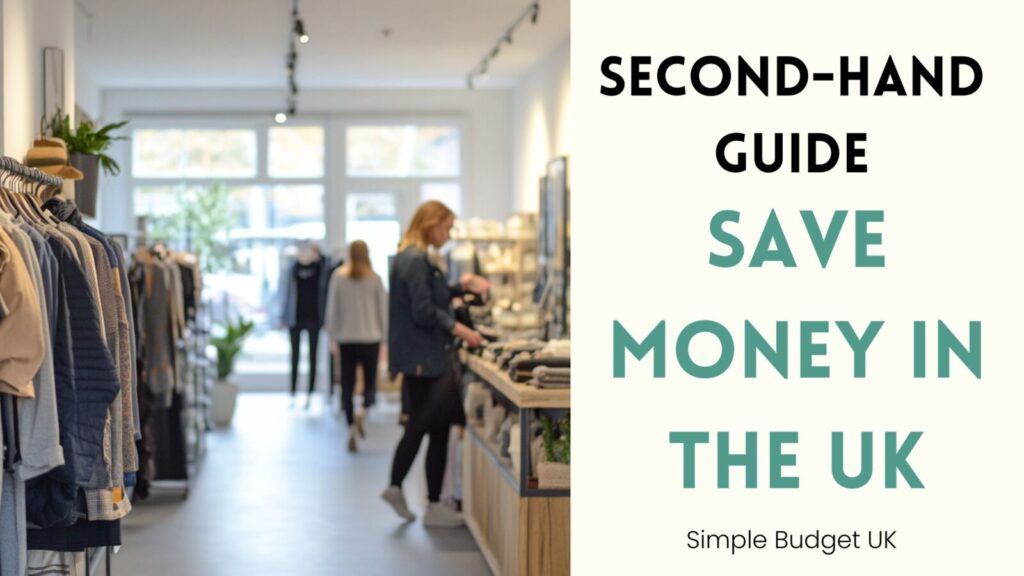
If you want to save money in the UK on a low income, it can feel impossible sometimes — especially during the ongoing cost of living crisis.
One thing that has genuinely helped me reduce spending without feeling deprived is shopping second-hand through charity shops, book cycles and car boot sales.
Before starting my £1,000 savings challenge, I used to overlook places like this completely. I assumed charity shops only sold old or damaged items, but the reality has been the complete opposite.
Some of the best bargains I’ve found recently include:
- Tops still with the tags on for only £2
- Good quality picture frames for my prints at £1 each
- Jigsaw puzzles for £2
- Books for under £1
- Home décor items that would cost far more brand new
These small savings quickly add up when you’re trying to stick to a realistic low income budget.
Why Charity Shops Are One of the Best Ways to Save Money in the UK

When money is tight, cutting costs matters more than chasing unrealistic budgeting advice.
Charity shops can massively reduce spending on:
- Clothes
- Home items
- Books
- Toys
- Kitchenware
- Furniture
- Entertainment
- Gifts
Some larger charity retailers such as British Heart Foundation often sell furniture, books, homeware and electrical items at far lower prices than buying new.
The biggest surprise for me has been the quality. Many items are barely used, and some are completely brand new.
Finding clothes with original tags still attached for £2 feels far better than paying high street prices.
Finding furniture second-hand is another massive win, though it can come with minor quirks! Last year, just before I started this savings challenge, I needed a new settee. I managed to find a gorgeous Next sofa in as-new condition for only £80. I eventually figured out why the previous owner probably got rid of it—the cushions had an annoying habit of constantly sliding off!
Instead of giving up on it, I bought some cheap, double-sided sticky Velcro and secured the cushions straight to the frame. Perfect result—they haven’t moved since! Spending a couple of pounds on a clever Velcro fix to secure an £80 high-street sofa is exactly how you beat the cost-of-living crisis on a tight budget.
If your goal is saving money in the UK in 2026, second-hand shopping is one of the easiest ways to reduce unnecessary spending without affecting your quality of life.
Book Swaps & Free Community Resources
Another thing I’ve started using more is local book cycles and community swap shelves.
These are brilliant if you enjoy reading but don’t want to keep spending money on books.
Some local areas now offer:
- Free book exchange boxes
- Community libraries
- Facebook giveaway groups
- Local reuse projects
- Freecycle groups
Using free local resources is something I’ll continue focusing on throughout this £1,000 savings challenge.
Saving money is not always about earning more — sometimes it’s about using what already exists around you.
Why Car Boot Sales Are Underrated for Budgeting
Car boot sales are another underrated way to save money on a low income.
You can often find:
- Household items
- Clothing bundles
- Children’s toys
- DVDs and games
- Gardening tools
- Craft supplies
- Puzzles and board games
- Furniture
for a fraction of retail prices.
Many sellers simply want items gone quickly, which means bargains are everywhere if you’re patient.
I’ve found that shopping second-hand also makes me think more carefully before buying things. I waste less money on impulse purchases because I focus more on value instead of branding.
The High-Risk, High-Reward World of Trade Outlet (Ashton-in-Makerfield)
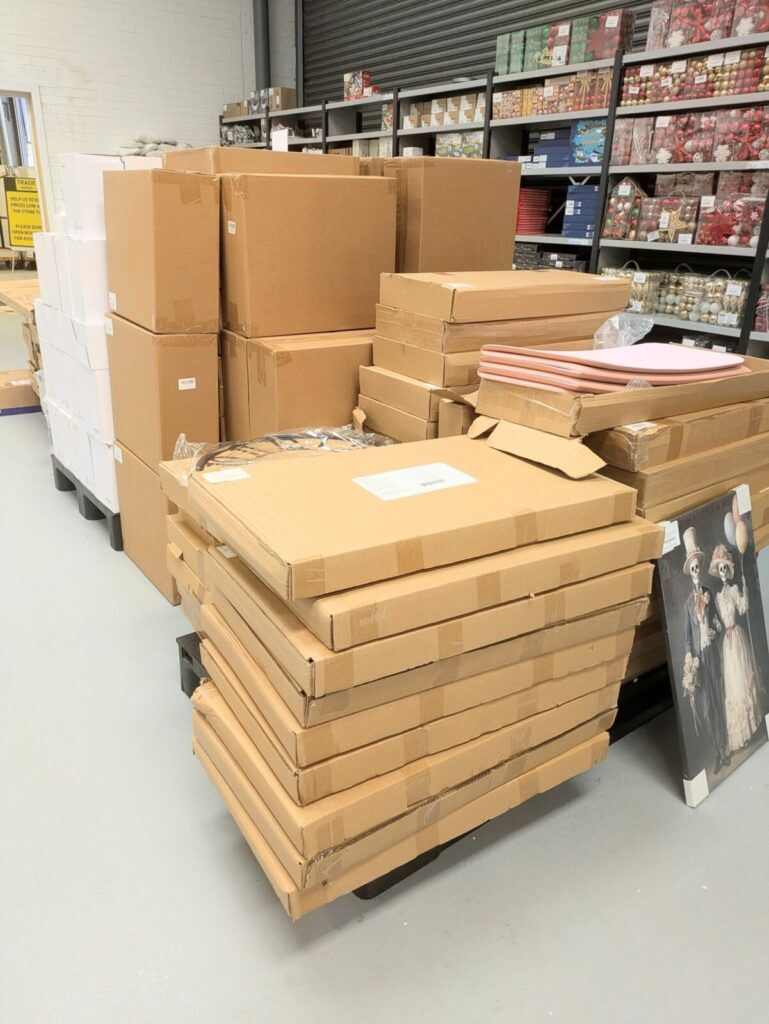
While car boot sales are fantastic for vintage finds and clothing bundles, my absolute favorite secret weapon for cheap, brand-new household items is a local trade warehouse.
Another recent discovery that has blown me away is visiting Trade Outlet at their warehouse in Ashton-in-Makerfield. They buy up massive liquidation pallets of excess stock, customer returns, and clearance goods directly from major online retailers like Amazon, selling them onto the public for absolute pennies.
The discounts are mind-blowing. Stock here is typically priced at just 15% of the original retail price. I have spotted items that easily sell online for £40 being sold on the floor for just £3! Because the prices are so dirt cheap, even if you do happen to buy something that doesn’t work, you haven’t really lost much money.
However, shopping here is a completely different ballgame to a standard charity shop, and you need to know the warehouse rules before you visit:
- The Catch: Everything is packed away inside plain, unbranded brown cardboard boxes.
- The Rule: You are strictly forbidden from opening, unboxing, or inspecting the item before you pay at the checkout till.
- The Risk: It is completely “sold as seen.” If you get home and find out the item is faulty or broken, it is tough luck. There are absolutely no returns or refunds.
How to shop it smart: Thankfully, you aren’t flying completely blind. Even though everything is sealed in plain brown cardboard, the boxes are individually labelled with the accurate original price, item details, and reference numbers. This means you can stand in the warehouse aisle, search the details on your smartphone, and instantly see the real product photos, dimensions, and customer reviews before making a decision!
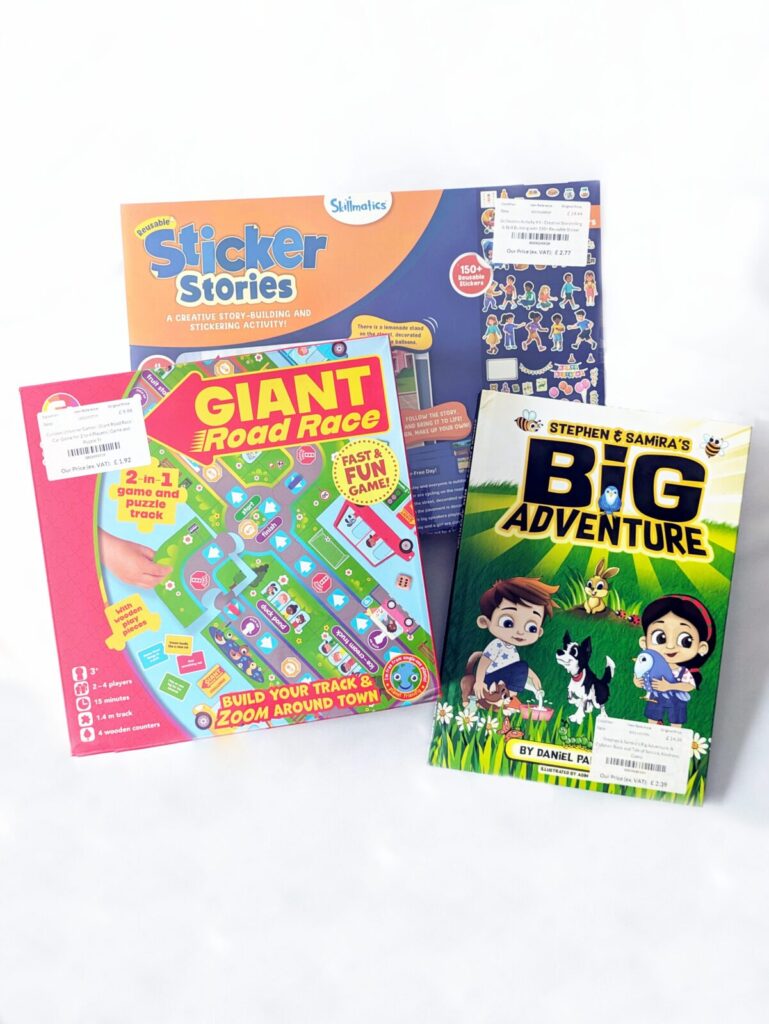
As you can see from the photo, I managed to score a major win for my £1,000 savings challenge. These three items—a Sticker Stories activity pack, a Giant Road Race game, and a Big Adventure storybook—had a combined high-street retail price of £38.76. By tracking down these cheap liquidation toys in the UK, I walked away paying a grand total of just £7.08 plus VAT!
Buying unboxed liquidation stock requires patience, but it is easily one of the best ways to bypass crazy high-street retail markups.
The Verdict: So far, my luck has been 100% perfect. I have never bought a single faulty item yet, and the massive financial wins completely outweigh the risks when you are trying to stretch a low-income budget.
👉 Budget Tip: Treat it like a fun mini-gamble for items you need but don’t want to pay high-street prices for. Stick to simple household goods, tools, textiles, or decor where fewer things can go wrong, and avoid complex electronics where a missing cable or broken internal circuit would ruin the item completely!
How These Small Savings Help My £1,000 Challenge
One of the biggest lessons I’m learning during this challenge is that saving money often comes from lots of small decisions rather than one huge change.
For example:
- Saving £10 on clothes
- £5 on books
- £15 on home décor
- £20 on entertainment
might not sound life-changing individually, but over a year these habits can save hundreds of pounds.
That money can then go towards:
- Emergency savings
- Paying bills
- Reducing stress
- Home improvements
- Future goals
When you live on a low income, every pound matters.
Second-Hand Shopping Is Also Better for Waste
Another unexpected benefit is reducing waste.
Buying second-hand helps:
- Prevent usable items going to landfill
- Reduce overconsumption
- Give items a second life
- Support local charities
So while I originally started using charity shops to save money, I now genuinely enjoy the experience as well.
You never know what hidden gems you’ll find.
My Top Tips for Finding Good Charity Shop Bargains:
- Visit regularly
- Check different areas
- Look for branded items
- Visit wealthier areas if possible
- Be patient
Final Thoughts
If you’re struggling financially or trying to complete your own savings challenge, I genuinely recommend giving charity shops, book cycles and car boot sales another look.
They’ve helped me:
- Spend less
- Find quality items cheaply
- Avoid unnecessary purchases
- Stay motivated during my £1,000 savings challenge
Saving money on a low income in the UK is difficult, but small realistic habits really do make a difference over time.
Sometimes the best way to Save Money in the UK is simply learning how to buy smarter.
New to Simple Budget UK?
💷If you are looking for the best place to start your money-saving journey, check out our complete Start Here: Simple UK Budgeting Guide. It is packed with free, actionable steps to help you take control of your cash right now!